

Article 12: Creation as Relative—Why Climate Policy Must Be Rooted in Indigenous Stewardship
MAKE DEMOCRACY GREAT AGAIN | The Call for a True Democracy: How America Can Finally Live Up to Its Best Ideals | A Substack Series by Randy S. Woodley

My mother, Anne Woodley, never went to college, but she held a kind of knowledge that no university has ever figured out how to teach. She grew up in a coal camp in north-central Alabama, dirt floors and Christmas oranges if you were lucky, and whatever Cherokee blood ran in our family had gone underground the way it had to in those years. But some things don’t fully disappear. They go quiet and wait.
When I was a boy, she would take me out into whatever patch of woods we could find—Michigan, wherever we were—and she would not just name things. She would introduce me to them. That distinction matters more than it might sound. You name something you own. You introduce someone you respect. She would stop at a tree and say something like, “This is our friend.” Not a metaphor. Not a teaching moment dressed up in sentimental language. A plain statement of fact, the way you’d introduce a cousin at a family reunion. The tree was kin, and I was being told to act accordingly. I was probably nine years old and didn’t fully understand what she was handing me. I understand it now.
That early formation settled into my bones before my mind knew what to do with it. Years later, when I encountered Indigenous theological frameworks describing humans as younger siblings in the community of creation, I didn’t feel like I was learning something new. I felt like I was finally finding the words for something my mother had already taught me in the woods.
The West never found those words. Instead, it found a different framework entirely—one in which creation is not a community of relatives but a collection of resources. Timber. Carbon credits. Ecosystem services. Even our most well-intentioned environmental language tends to describe the community of creation in terms of what it does for us, which is just extraction wearing a green jacket. And now we are living inside the consequences of that framework, and the numbers are not ambiguous.
What the Numbers Say
Atmospheric CO₂ reached 422.8 parts per million in 2024—a new record, and the largest single-year increase ever recorded.¹ We are now 50 percent above pre-industrial levels, and the rate of increase is 100 to 200 times faster than any natural increase in the past 800,000 years. 2024 was the warmest year since global records began in 1850, by a significant margin, continuing a ten-year streak in which every year has set a new record.²
A landmark 2024 synthesis of 485 studies and more than five million projections found that at current emissions trajectories, roughly one in twenty species worldwide faces extinction by 2100. At higher warming scenarios—which current international commitments are tracking toward—that number climbs toward one in three.³ Modern extinction rates are already 50 to 100 times above background levels.⁴ We are in the middle of a mass extinction event, and we are the cause of it.
These are not future problems. The wildfires, the floods, the heat domes, the failing crops, the climate refugees—these are present-tense realities. And they fall first and hardest, as colonial harms always do, on Indigenous peoples, coastal communities, the global poor, and the most vulnerable members of the community of creation. The people who have done the least to cause this catastrophe are absorbing the most of its damage.
You Cannot Destroy Your Relatives and Survive
Here is the Indigenous truth that the West has spent five hundred years trying to ignore: you cannot destroy your relatives and survive. Not ultimately. Not really. You can defer the consequences for a while—long enough to get rich, long enough to build an empire, long enough to convince yourself that you have mastered what you have only temporarily subdued. But the community of creation is not a resource to be extracted. It is a web of relationships, and when you tear enough of it, the whole thing comes down.
My wife Edith is Eastern Shoshone, and she has never needed anyone to explain this to her. She carries that knowledge the way she carries everything—quietly, without performance, as simple fact. I remember walking with her through the oak grove on our land in Oregon. We weren’t in a hurry. We were just walking the way you walk when you’re not going anywhere in particular but somewhere important anyway. Edith stopped beside one of the larger oaks—an old one, the kind of tree that has watched several generations of humans make their plans and come to nothing. She placed her hand on the bark and spoke to it softly, the way you’d speak to an elder you hadn’t seen in a while. Not loudly. Not for an audience. Just a greeting between relatives who know they belong to each other.
I have seen her do this many times. It is not ceremony in the formal sense. It is not theater. It is simply what you do when you understand that the world did not begin with you and will not end with you, and that the beings around you have their own standing, their own wisdom, and deserve the basic courtesy of acknowledgment. Western climate policy is built almost entirely on the assumption that creation is a system humans manage. What Edith was doing at that oak was something older and more accurate: she was being a good relative. There is an entire policy framework in that gesture. We just haven’t been humble enough to adopt it.
Co-Sustaining the Community of Creation
I should mention here that I’ve written elsewhere in this series about a dream I had about Eloheh Farm, in which all the plants—wild and cultivated alike—gathered before me and spoke with one voice: “We are healing you.” I had been walking around for years with the motto that we were healing the land. The dream corrected me. The relationship runs both directions, which is to say it runs the way all real relationships run. We co-sustain the community of creation, and it co-sustains us. The moment we forget that second half—the moment we reduce the relationship to management—we have already lost the thread.
Indigenous peoples have been practicing co-sustaining relationships with the community of creation on this continent for millennia. Controlled burns that maintained the health of forests and grasslands. Fishing practices calibrated to the rhythms of salmon runs rather than the demands of markets. Agricultural systems—the Three Sisters, the food forests, the seed-keeping traditions—designed to enhance rather than deplete. Water practices rooted in the understanding of water as a sacred relative, not a commodity. Seven-generations thinking that required decision-makers to ask what their choices would mean for people not yet born.
None of this was primitive. All of it was sophisticated beyond what the extractive economy has ever managed, because it was organized around a question the extractive economy never asks: How do we live here in a way that keeps the whole community of creation healthy? That question is not nostalgic. It is the most urgent policy question of our time.
What Policy Rooted in Relationship Looks Like
A Green New Deal framework—one that took seriously both climate and justice—is the closest our current political vocabulary has come to asking that question at scale. Massive investment in renewable energy. A just transition for workers in fossil fuel communities. Regenerative agriculture practices that rebuild topsoil and sequester carbon. Rights of nature laws that give legal standing to rivers, forests, and ecosystems as entities with their own interests—not just resources to be managed for human benefit. Indigenous leadership in climate policy, not as a symbolic gesture but as a practical necessity, because the people who have been co-sustaining specific landscapes for generations hold knowledge that no climate model currently captures.
The research on this is clear and has been for years: Indigenous-managed lands consistently show better ecological outcomes than lands managed by federal agencies or private interests.⁵ When Indigenous peoples have decision-making authority over their traditional territories, biodiversity increases, water quality improves, carbon is sequestered more effectively, and the community of creation rebounds. This is not coincidence. It is the result of a different relationship to the land—one organized around reciprocity rather than extraction.
Water protection deserves particular emphasis. Water is not a resource. In Indigenous understanding across virtually every tradition on Turtle Island, water is a living relative—the bloodstream of creation, the first medicine, the connector of all life. The Standing Rock movement was not fundamentally about pipeline politics, though it was certainly about that. It was about what it means to treat water as a relative rather than a commodity. “Mni Wiconi”—water is life—is not a slogan. It is an accurate description of reality that our current legal and economic frameworks are entirely unprepared to take seriously.
Fire management is another domain where Indigenous knowledge is finally, slowly, getting a hearing. The colonial suppression of controlled burning—practiced by Indigenous peoples across the continent to maintain forest health, encourage the growth of food plants, and reduce catastrophic wildfire risk—has contributed directly to the catastrophic fire seasons now devastating the West. Eloheh sits in Oregon’s Willamette Valley, and we have watched those fires get worse every year. The knowledge of how to work with fire rather than against it never disappeared. It was suppressed. Recovering it is not a romantic gesture toward the past; it is practical climate adaptation and we are practicing it on our 10 acres.
The Worldview Behind the Policy
Let me be honest about what I am actually arguing here, because it goes deeper than any specific policy proposal. The climate crisis is not primarily a technical problem. We have the technology to transition to renewable energy. We have the agricultural science to rebuild soil. We have the data to justify every policy I’ve described. What we lack is the worldview that would make us willing to implement those policies—a worldview in which the community of creation has standing, in which future generations have rights, in which the question of whether something is profitable is subordinate to the question of whether it is sustainable and right.
That worldview exists. It has existed on this continent for millennia. It is what my mother was handing me in those woods when she introduced me to a tree as a relative. It is what Edith was practicing at that oak in Oregon. It is what every seed keeper, every traditional fire tender, every water protector has been carrying forward against enormous pressure to abandon it.
A true democracy—one worthy of the name—does not treat the community of creation as an externality to be managed for short-term human profit. It recognizes that we are members of a community that includes far more than just the human, and that our survival depends on honoring those relationships rather than liquidating them. The land is not our property. As we say in Indian country: you don’t own your mother.
—
Notes
¹ NOAA Global Monitoring Laboratory, “Climate Change: Atmospheric Carbon Dioxide,” 2024, https://www.climate.gov.
² NOAA National Centers for Environmental Information, “2024 Global Climate Report,” 2025.
³ Mark Urban, “Global extinction risk from climate change,” Science 386 (December 2024).
⁴ EBSCO Research Starters, “Extinctions and Climate Change,” citing IUCN Red List data, 2024.
⁵ Garnett et al., “Indigenous Peoples and Biodiversity,” Nature Sustainability 1 (2018): 369–374.
—
In the next article, we step back to ask a question that underlies everything in this series: what kind of passage do we offer our young people into adulthood and citizenship? And what would it look like to build institutions of service—and yes, of peace—worthy of what this moment demands?
Article 13: Service as Passage—Why Universal Service Options and a Peace Pentagon Transform Both Security and Community
———
Randy Woodley is a Keetoowah Cherokee descendant, Distinguished Professor Emeritus, and co-sustainer of Eloheh Indigenous Center for Earth Justice and Eloheh Farm & Seeds in Oregon’s Willamette Valley. He is the author of fifteen books including Becoming Rooted and Shalom and the Community of Creation.
Donate to the Eloheh Legal Defense Fund
As many of you know, we are in an ongoing struggle with the county for the right to host people on our own property. This work is key to what we do and shouldn’t be in question.
If you’re able to help with the legal costs of this fight, our legal defense fund is here: Eloheh Legal Defense Fund. Every bit helps, and we are grateful for whatever you can give.
Part 11:

Part 10:
Part 9:
Part 8:
Part 7:
Part 6:
Part 5:
Part 4:
Part 3:
Part 2:
Part 1:

What if the solutions to housing, healthcare, immigration, and broken democracy have been practiced for millennia by our Indigenous ancestors right here on Turtle Island? In this 15-part series, I explore how these policies all flow from the same shift: treating people as relatives rather than resources. America has never been a true democracy—but it could be.
Don’t miss this series, right here on Substack! Be sure you’re subscribed and be sure to invite your friends!
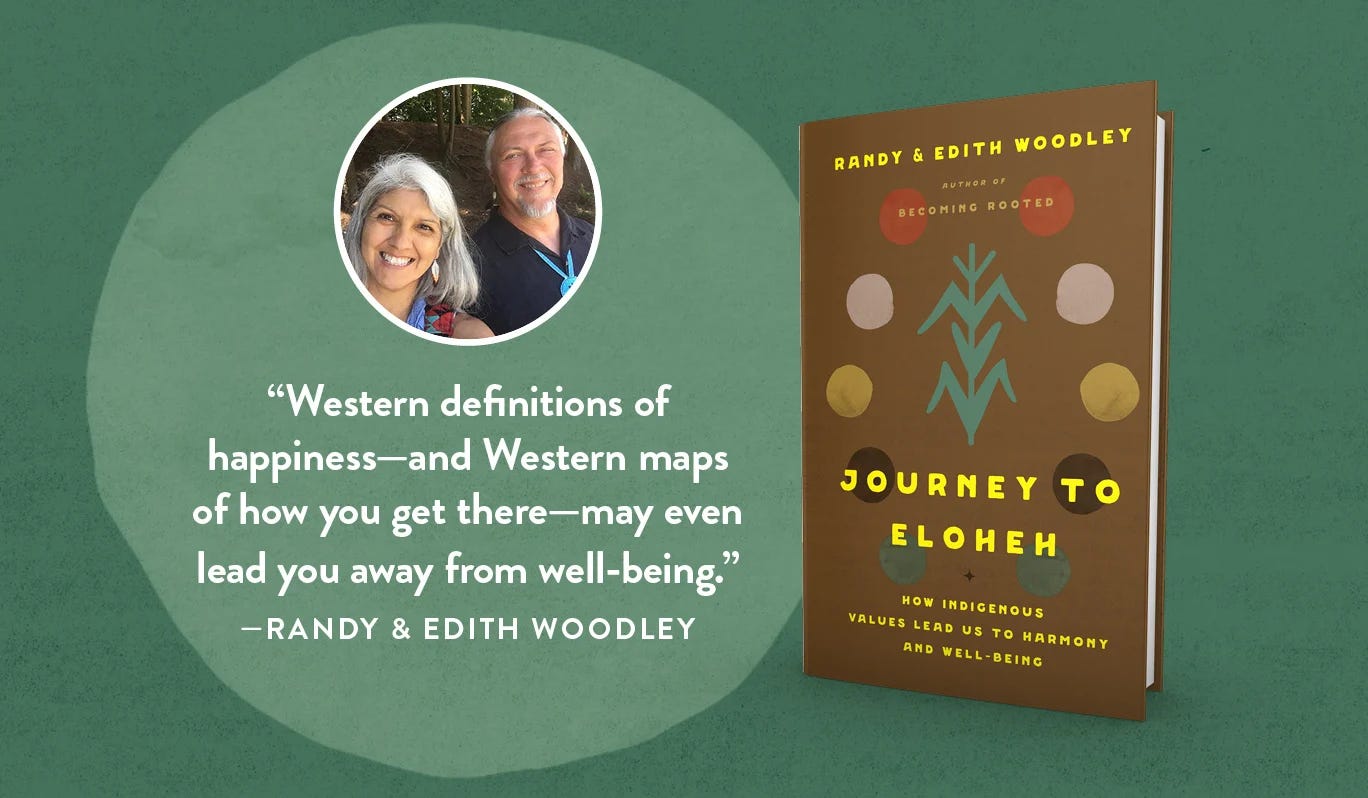
Discover the Harmony Way and learn ways of life that lead to true wholeness, well-being, and justice.
Eloheh is a word that we as a couple have related to for more than three decades. It’s the word we have chosen as a reference point in raising our family. Eloheh is at the center of our service to our community, and it encompasses the values in which we have built community over the years. So when we share our journey to Eloheh, know that we are speaking in the broadest of terms and the most intimate as well. We are talking about overall well-being but with very specific applications.
We have been on this journey to Eloheh for quite some time. For many years, people have listened to us, read our books, and visited Eloheh Indigenous Center for Earth Justice, our regenerative agroecology farm in Oregon. For years, people have asked us to write our story. Finally, we have decided it is time.
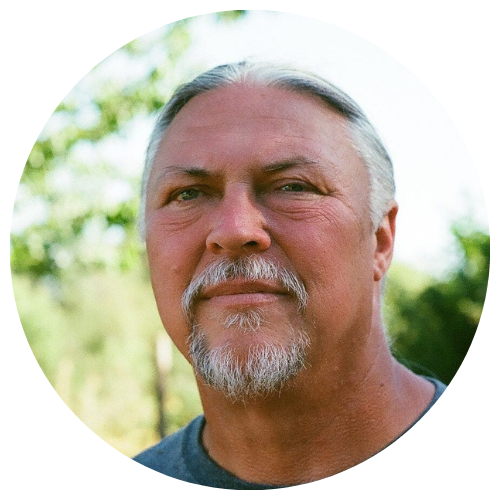
Randy Woodley is co-author of Journey to Eloheh: How Indigenous Values Bring Harmony & Wellbeing and the author of numerous books on decolonizing faith and Indigenous theology. He is a retired distinguished professor emeritus and former Director of Indigenous and Intercultural Studies. He writes from Eloheh Indigenous Center for Earth Justice, where he and his wife Edith practice regenerative agriculture and traditional seed keeping.
I was speaking to a friend and commenting on how farmers often say, "Don't name the animals that you intend to eat." You don't want a relationship with what you're eating for dinner. And yet, in the biblical narrative, naming the animals was the first task given by Creator. My friend said that Adam was giving names like lion, tiger and bear, not actual names. I said that he was assuming that. He replied that I was assuming it was something more. Perhaps, but I said that naming still implies relationship. (I didn't recall at the time that in the gospels Jesus gives us the example of the good shepherd, who knows his sheep by name. The implication is not "sheep, sheep, sheep", but individual names. Relationship!) I admit hypocrisy here because on our land we don't raise animals we eat, only chickens and dairy goats. My wife won't allow it. She does not want to know, by name, who we are eating. I am glad to comply. So we source our meat from other farms. But I feel that we would respect everything more if we did have to know it, and name it, before we call for it's life to eat it. You can't develop that respect with meat on a styro container in the grocery store. All this to say, I'm with you 100%. Creation is our relative. She has names. She deserves our care.
'Sorry, 'rated' should have been 'raped'