

Wisdom Over Arithmetic—Why Consensus Decision-Making Serves Everyone Better Than the Electoral College
Part 6: Make Democracy Great Again: The Call for a True Democracy A 15-Part Substack Series by Randy S. Woodley

I want to tell you something that should embarrass every American who’s ever claimed we live in a democracy. In the year 2000, the person who got fewer votes became president. It happened again in 2016. And both times, the system worked exactly as it was designed to work. That’s the part nobody wants to say out loud. The Electoral College wasn’t broken. It was doing its job—the job it was built to do in 1787 by men who didn’t trust ordinary people to govern themselves.
Let’s be honest about what the founders created. The Electoral College was a compromise between those who wanted Congress to choose the president and those who wanted a popular vote—and the compromise landed squarely on the side of protecting the interests of slaveholding states and wealthy property owners. The three-fifths clause gave Southern states extra electoral power for every enslaved person they held—people who couldn’t vote, couldn’t testify, couldn’t be recognized as fully human, but who padded the political power of the men who owned them. That’s the foundation we’re still standing on.
Today the distortion has shape-shifted but hasn’t disappeared. A voter in Wyoming carries roughly three and a half times the electoral weight of a voter in California. Candidates spend almost all their time and money in a handful of swing states while ignoring the rest of the country. Millions of Americans in solidly red or blue states know, before they even walk into the polling place, that their presidential vote is functionally ceremonial. We call this democracy. My ancestors would have called it something else entirely.
And here’s where I need to take you somewhere most political commentators won’t go. Because the problem isn’t just the Electoral College. The problem is the entire winner-take-all mentality that American governance runs on—51-49, and half the country walks away feeling like they lost a war. Every major vote becomes a blood sport. Every election cycle ratchets the tension tighter. People aren’t trying to govern together anymore. They’re trying to defeat each other. And we’re watching our communities and our republic tear apart because of it.
Our Indigenous ancestors across Turtle Island practiced something fundamentally different. When my Keetoowah Cherokee ancestors made decisions that affected the whole community, they didn’t take a quick vote and tell the losing side to deal with it. Everyone in the village had a chance to speak. The British actually complained about this—they said even the most straightforward decisions would take two or three days because everyone, including the women, had to give input. They mocked us as a “petticoat government.” Funny thing—women are often the wisest among us. Those British observers couldn’t understand why you’d slow down a decision to hear from people who, in their world, didn’t matter. But our ancestors understood something the founders of this country never grasped: if everyone has to live with the decision, then everyone needs a voice in making it.
This wasn’t some romantic campfire ritual. This was sophisticated governance developed over millennia. The Haudenosaunee Great Law of Peace—which influenced the U.S. Constitution, though the founders conveniently left out the parts about women’s authority and consensus—required broad agreement for major decisions. Clan mothers held veto power. Leaders who failed the people could be removed. The process prioritized the health of the whole community over the temporary dominance of any faction. And it sustained complex, multi-nation confederacies for centuries before Europeans showed up with their “majority rules” arithmetic.
What I’ve learned sitting in traditional gatherings over the years: real consensus isn’t about everyone agreeing on everything. That’s a romanticized notion. Real consensus means everyone’s voice is heard, everyone’s legitimate concerns are addressed, and the solution that emerges serves the whole community—including the generations not yet born. It’s harder than taking a vote. It takes longer. It requires patience and genuine listening. And it produces decisions that actually hold, because people feel ownership of what they’ve helped create rather than resentment over what was forced on them.
Now imagine bringing that wisdom into our current system. Instead of simple majority rule for significant legislation, imagine requiring something like a seventy-five percent supermajority. I know—people immediately say that would grind everything to a halt. Good. The current system’s addiction to speed has given us laws passed at midnight that get reversed with every change of power, creating whiplash and instability. Hasty legislation serves the lobbyists who wrote it, not the people who have to live under it. Real solutions, like real relationships, take time to develop.
Think about what a supermajority requirement would do to political incentives. You can’t pass legislation with seventy-five percent support by demonizing the other side. You have to actually talk to people who disagree with you, address their concerns, find common ground. Grandstanding becomes useless when you need broad support. The performative rage that passes for governance these days would give way to something our ancestors would recognize: the hard, sacred work of building agreement.
And yes, I said sacred. Because making decisions that affect millions of people and their children’s children is sacred work. It deserves more than a bare-minimum vote squeaked through on party lines at two in the morning. Our ancestors required broad consensus for major decisions because they understood governance as a responsibility to seven generations ahead. When you’re thinking about your grandchildren’s grandchildren, you slow down. You listen harder. You make sure the decision is one the whole community can stand behind.
There are practical steps we could take right now. The National Popular Vote Interstate Compact—an agreement among states to award their electoral votes to the winner of the national popular vote—has already been adopted by states representing 209 electoral votes. It takes effect at 270. That’s not a revolution. It’s an end-run around an outdated system using the system’s own rules. Ranked-choice voting, already used in Alaska, Maine, and dozens of cities, lets people vote their actual preferences instead of strategically against their fears. It rewards candidates who appeal beyond their base and penalizes the most divisive voices. Citizen assemblies—randomly selected groups who spend weeks studying an issue and developing recommendations—have worked in Ireland for some of the most contentious questions imaginable. When ordinary people sit together without cameras and donors hovering, they find common ground that professional politicians never could.
But here’s what I really want you to hear, because it connects to everything else in this series. The winner-take-all system isn’t just inefficient. It’s an expression of the same extractive worldview we’ve been tracing through every article. Extraction says: my winning requires your losing. Relationship says: your flourishing and mine are bound together. Extraction says: power is something to seize and hoard. Relationship says: authority is a responsibility held in trust for the community. Extraction builds systems where money buys outcomes and the loudest voice wins. Relationship builds systems where wisdom is heard, where every voice matters, and where decisions serve the whole.
The Electoral College, the fifty-one-percent-takes-all approach, the gerrymandering, the voter suppression—these aren’t just political problems. They’re symptoms of a worldview that treats governance the same way it treats land, water, and people: as something to be captured and exploited rather than shared and stewarded. And as long as we accept that worldview, no amount of policy tinkering will fix what’s broken.
Last week we talked about getting money out of politics. This week I’m asking you to imagine something even more radical: what if we designed our democracy to actually function like one? What if decisions affecting everyone required buy-in from nearly everyone? What if we stopped treating elections like wars and started treating governance like the collective, sacred responsibility our ancestors always knew it to be?
The policies people want—affordable housing, universal healthcare, humane immigration reform, a livable planet—have had majority support for years. They don’t happen because a system built on narrow margins and purchased influence doesn’t need to listen to the majority. A supermajority system would force a different kind of politics. A consensus-oriented politics. The kind our ancestors practiced when they governed nations, settled disputes, and made decisions that held across generations.
We had real democracy on this continent for thousands of years before anyone showed up with an Electoral College and called it progress. Our ancestors knew: when all voices shape decisions, communities stay strong. When a few impose their will on the many, everything falls apart. The wisdom is right here. It always has been.
Some will say this is naïve. That the world is too complicated for consensus. That you can’t govern three hundred and thirty million people the way a tribal council governed a nation. But here’s what I’d say to that: we’re not doing so well with the current approach. Polarization at historic levels. Trust in government at historic lows. Legislation that lurches back and forth with every administration while the actual problems—housing, healthcare, climate, inequality—just keep getting worse. The “sophisticated” system we have now is producing chaos, resentment, and paralysis. Maybe what looks naïve from inside a broken system is actually wisdom from people who kept their nations running for millennia.
At Eloheh, when Edith and I make decisions about the farm—what to plant, what seeds to save, who to welcome for teaching—we don’t take a vote. We talk. We listen to each other, to the land, to the seasons, to what the plant relatives are telling us. Our board runs on consensus-not votes. It takes longer than a show of hands. It also produces decisions we can both stand behind, decisions that account for things a quick vote would miss. Scale that up. Apply that patience, that respect for every voice, that commitment to the whole community’s wellbeing, to how we govern ourselves. That’s what our ancestors modeled. That’s what we need.
America keeps saying it wants to be a democracy. Maybe it’s time we actually tried one.
Next week: Article 7—Education as Liberation: Why Learning Must Return to Life, Land, and the Learner
Part 5:

Part 4:
Part 3:
Part 2:
Part 1:
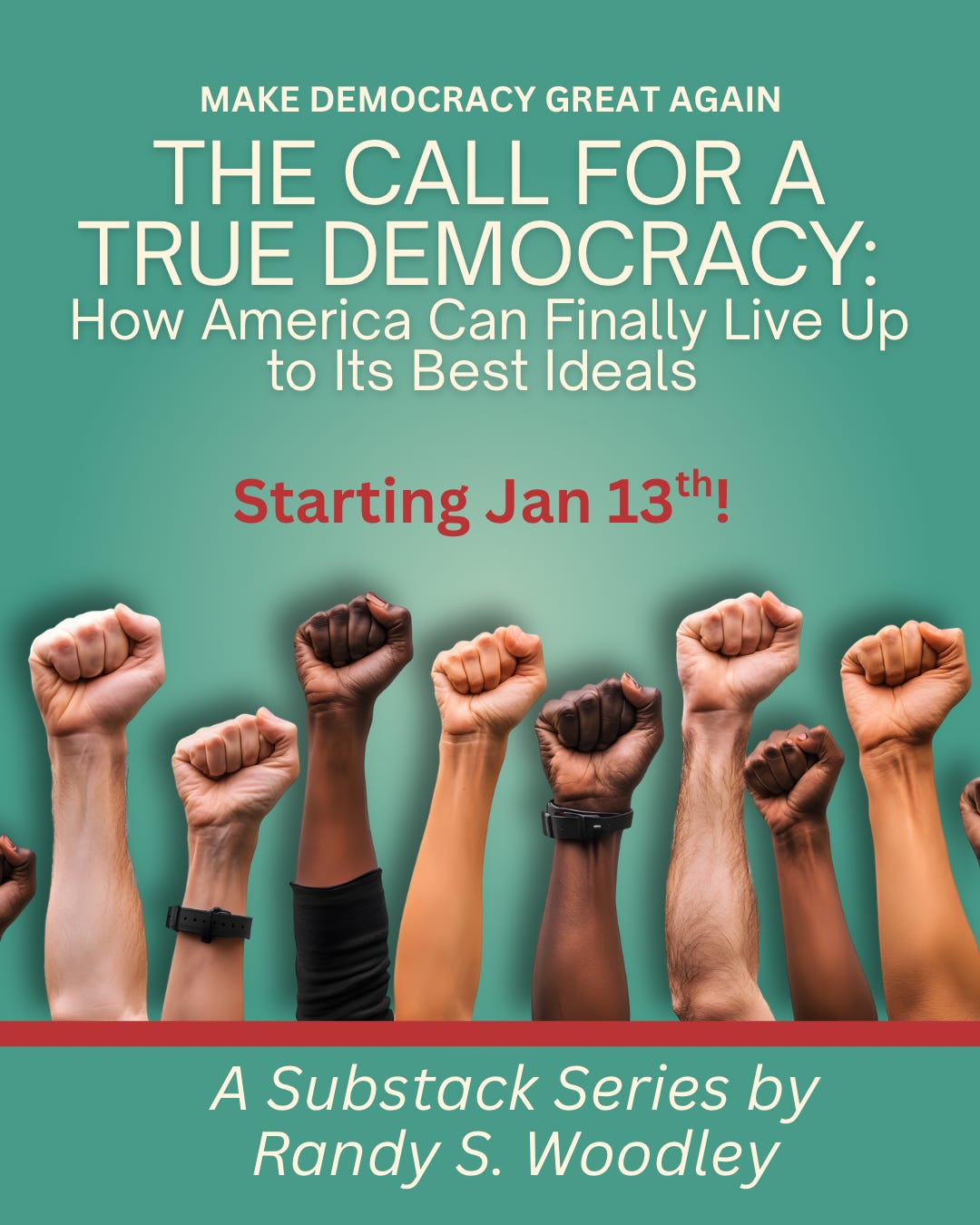
What if the solutions to housing, healthcare, immigration, and broken democracy have been practiced for millennia by our Indigenous ancestors right here on Turtle Island? In this 15-part series, I explore how these policies all flow from the same shift: treating people as relatives rather than resources. America has never been a true democracy—but it could be.
Don’t miss this series, right here on Substack! Be sure you’re subscribed and be sure to invite your friends!
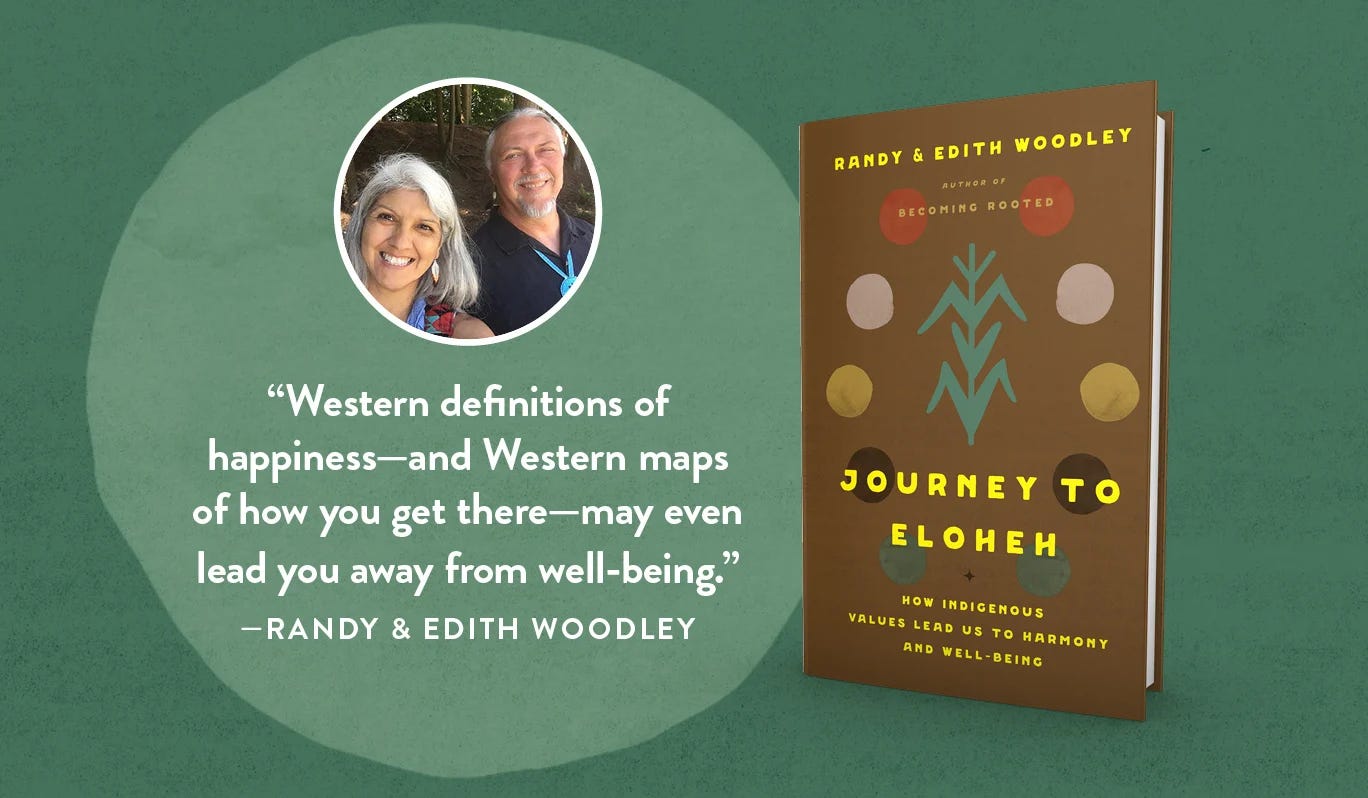
Discover the Harmony Way and learn ways of life that lead to true wholeness, well-being, and justice.
Eloheh is a word that we as a couple have related to for more than three decades. It’s the word we have chosen as a reference point in raising our family. Eloheh is at the center of our service to our community, and it encompasses the values in which we have built community over the years. So when we share our journey to Eloheh, know that we are speaking in the broadest of terms and the most intimate as well. We are talking about overall well-being but with very specific applications.
We have been on this journey to Eloheh for quite some time. For many years, people have listened to us, read our books, and visited Eloheh Indigenous Center for Earth Justice, our regenerative agroecology farm in Oregon. For years, people have asked us to write our story. Finally, we have decided it is time.
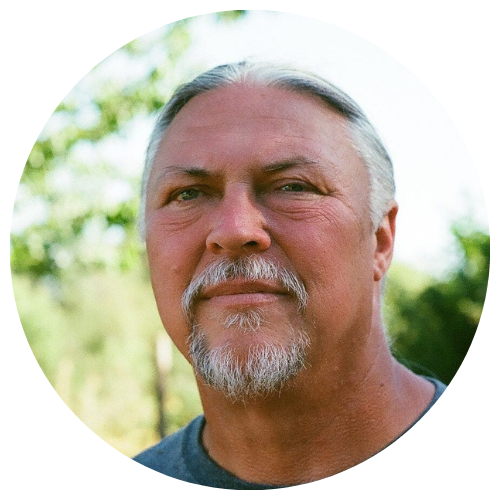
Randy Woodley is co-author of Journey to Eloheh: How Indigenous Values Bring Harmony & Wellbeing and the author of numerous books on decolonizing faith and Indigenous theology. He is a retired distinguished professor emeritus and former Director of Indigenous and Intercultural Studies. He writes from Eloheh Indigenous Center for Earth Justice, where he and his wife Edith practice regenerative agriculture and traditional seed keeping.
Well stated! I agree! I am a member of the Friends (Quakers) and that is also how we do our best to run governance. Sadly however it is not popular in our society, this we are few in number.,
I agree that the National Popular Vote is an end run. I also agree with your point about the three-fifths clause being the foundation we're still standing on. Currently, I see the National Popular Vote as a first step toward consensus, albeit one that involves dismantling that foundation. When Fani Willis was elected District Attorney for Fulton County, Georgia, she was asked what changes she could bring to Atlanta. Her response? "You can't change 400 years in 4, but we can start."